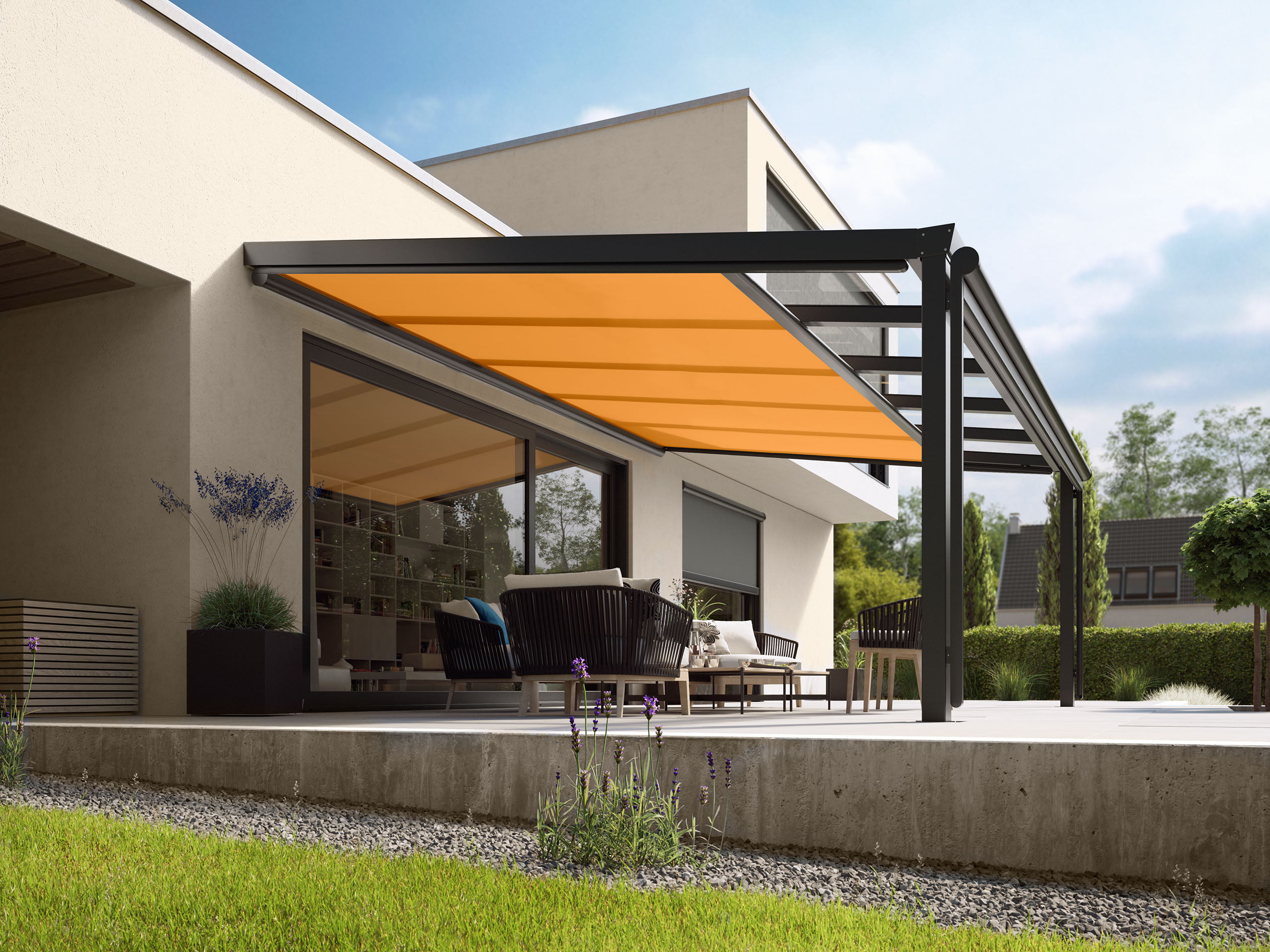
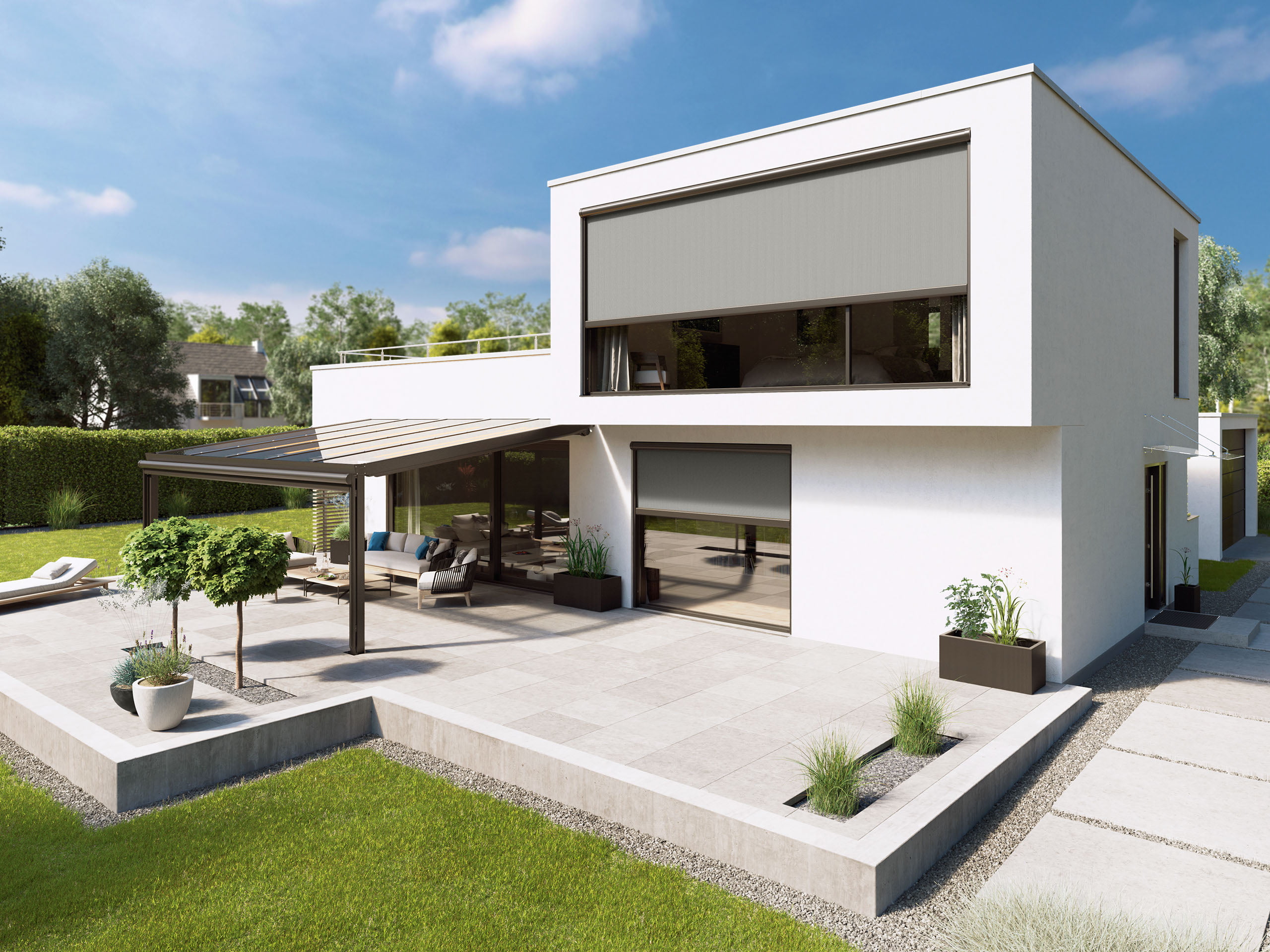

Why External Shading?
Designers, Architects and Engineers now more than ever need to consider the performance characteristics of solar shading, at an early design stage of the building in order to satisfy low energy building requirements.
The Energy Consumption of Buildings Directive totally acknowledged the role of ‘solar protection devices’ in reducing energy consumption.
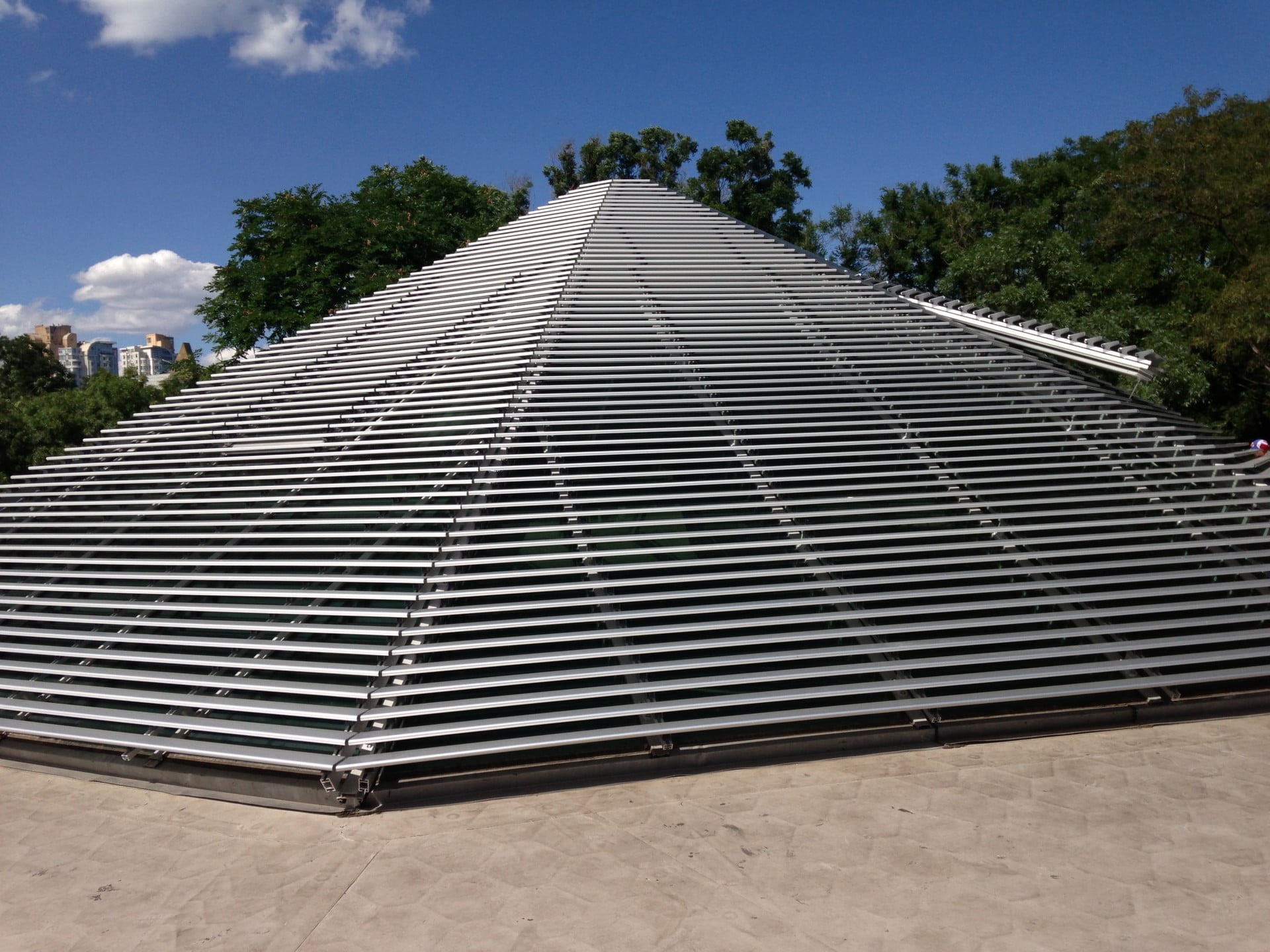
Here in the UK, we are catching up with the rest of Europe, who have always known the clear benefits of external shading in terms of solar gain. Not only the solar and heat usage improvements, but also the CO2 savings to be gained by specifying the correct products.
Typically energy consumed creates CO2. A building and its services are critical determinants in a CO2 footprint, because they use a significant amount of energy.
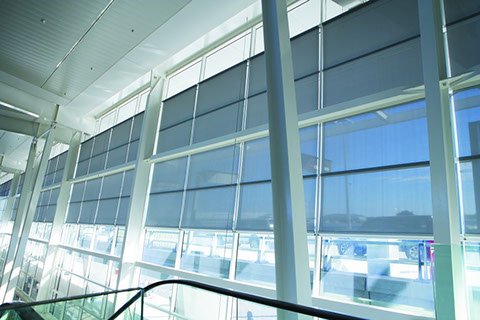
The correct usage of solar shading can dramatically reduce the CO2 footprint. It has been concluded by various organisations carrying out studies in this field, that ideally a window should have both internal and external shading.
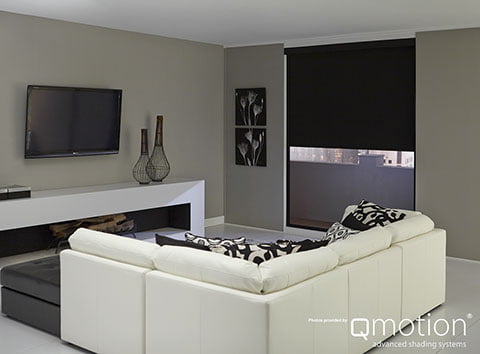
Internal provides visual comfort e.g. glare control, darkening performance and external for thermal comfort e.g. solar gain control.
It should be noted that the air space between devices and the glazing also act as a thermal barrier.
It is critical to understand the huge benefits of external shading and the World Green Building Council have indicated this in their publication, Health, Well-being and Productivity in Offices.
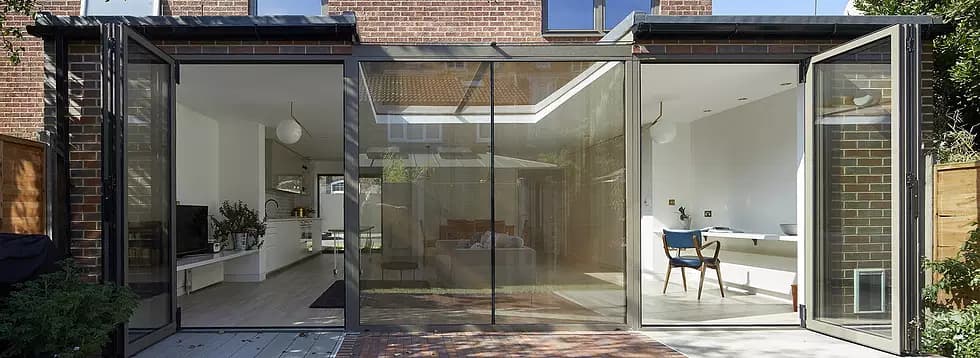
You will see that RIBA Awarded properties, like Caring Wood House have external blinds to control heat and glare which results in one of the most eco-friendly passive house designs in the country.
 Due to the improved design of modern buildings, that are currently being constructed, buildings are normally well insulated.
 becoming more and more available and used in Britain. But why “Unfortunately”? It is well known that air conditioning units are very expensive to run, but worse than that, they have a huge adverse effect on the environment. Air conditioning units are not only costly to the environment to manufacture with respect to CO2 emissions, they are even worse when it comes to their use.
 degrees.
 comfortable with the temperature, when we go about our daily tasks. In the working environment, it is more critical to have the right ambient temperature and a comfortable workspace in order to gain the best performance from our people.